Brand identity for 3D‑printed accessories.
A small company that manufactures and sells utilitarian accessories made with 3D printing. The product is practical by nature, but the brand needed a clear character and visual presence.
The goal was to build a compact identity system that scales easily, works across both digital and physical touchpoints, and stays clean — without unnecessary decoration.
Visual system
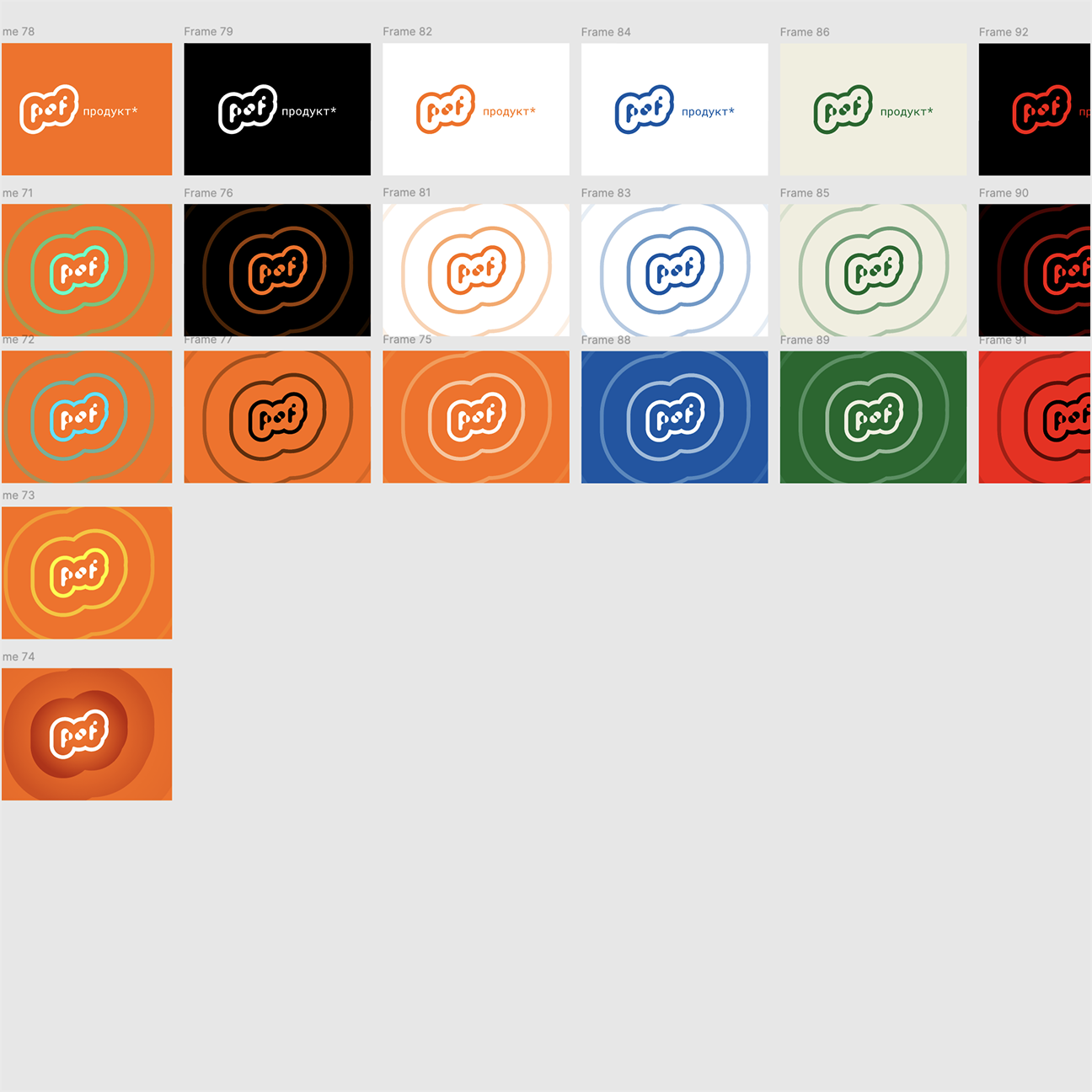
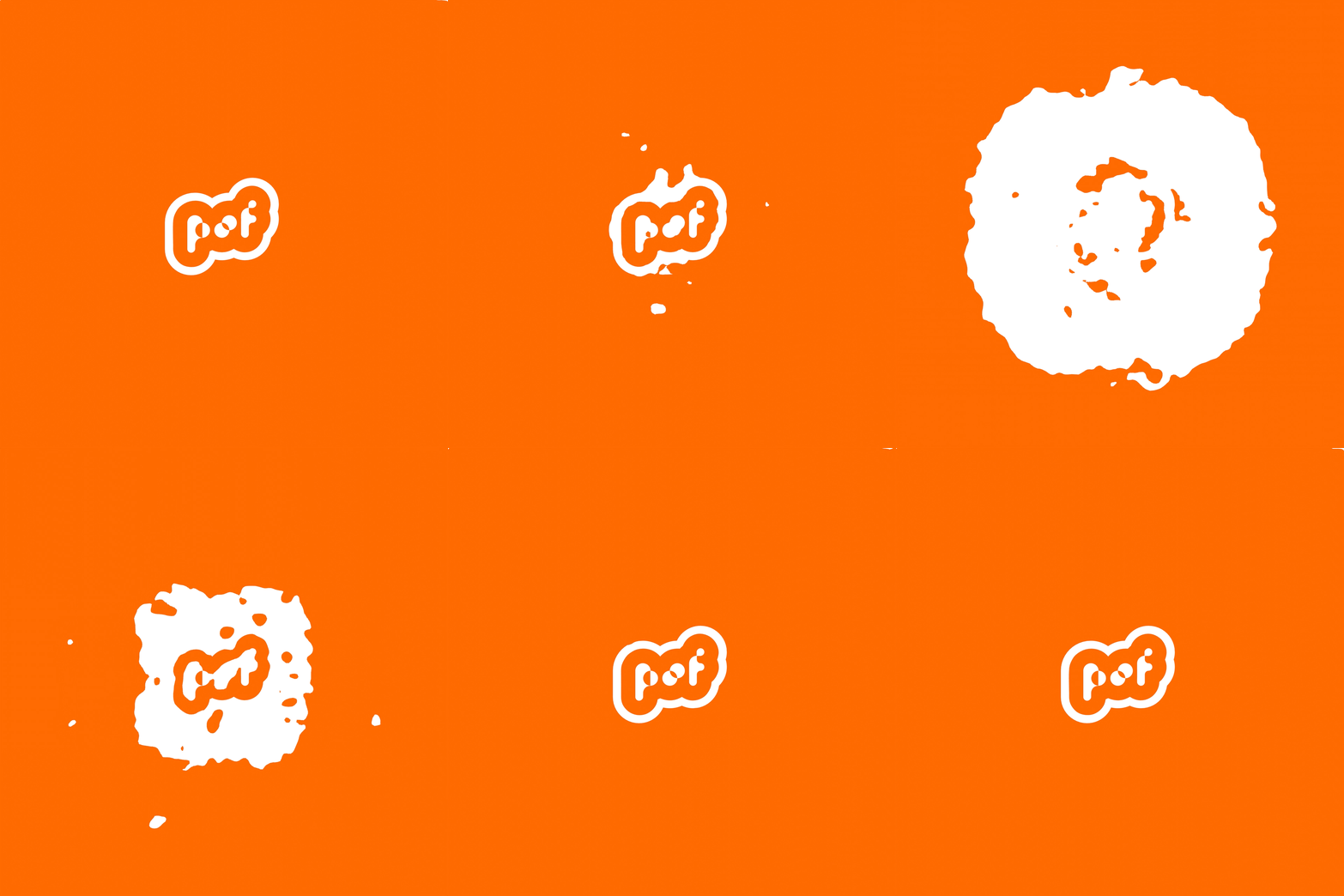
The identity is built around a simple, flexible logo shape that references volume and the production process. It remains readable at small sizes, holds up on high‑contrast backgrounds, and supports bold graphic experimentation without losing clarity.
The core color is a saturated orange — energetic, highly legible in digital environments, and deliberately distinct from typical “tech” palettes. Additional color variations support different scenarios and formats without diluting the overall character.

Exploration
The system evolved through repetition of the logo form. I explored how the mark behaves across different color combinations, scales, and compositions — building graphics from the same core elements instead of adding new shapes.
Over time, this naturally led to the next step: motion. The repeated form started working not only in static layouts, but also in movement — reinforcing the sense of volume and the process behind 3D printing.
Motion
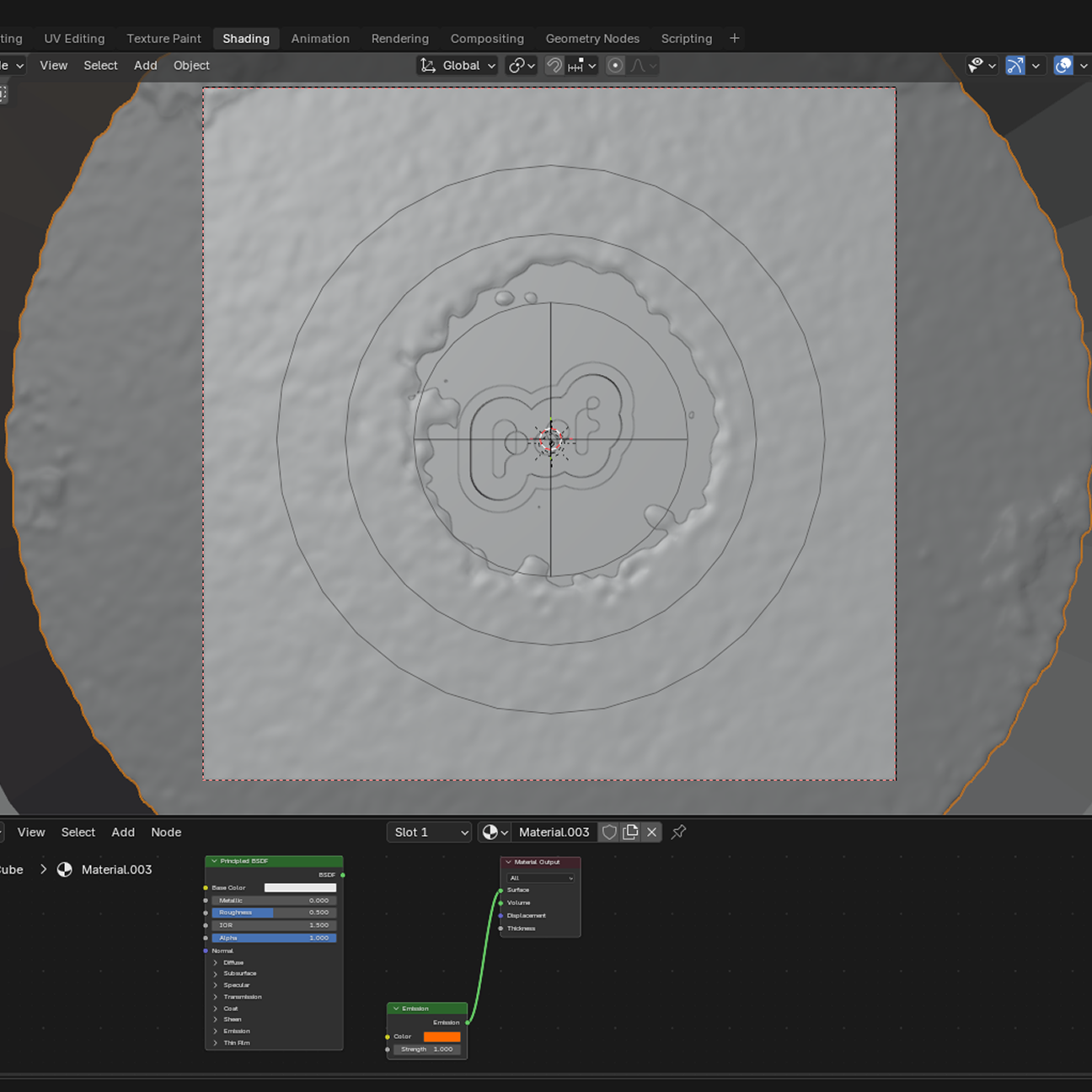
I created a 3D logo animation in Blender. It highlights the volume of the shape and references 3D printing without literal visuals or obvious metaphors. The mark remains readable, while motion adds energy and a subtle tech feel.
Takeaways
In this case, my main task was working with materials, light, and dynamics. I aimed to create a visually tactile experience where form and lighting work together to build a specific atmosphere.
The project became an exercise in complex composition and finding unconventional visual metaphors. I went from sketches and modeling to the final render and post‑processing, paying attention to every detail — from surface reflections to animation rhythm. This helped me solidify my skills in the 3D pipeline and learn to use complex visual effects as a tool to capture and hold user attention.
Did you think there’d be something here?